

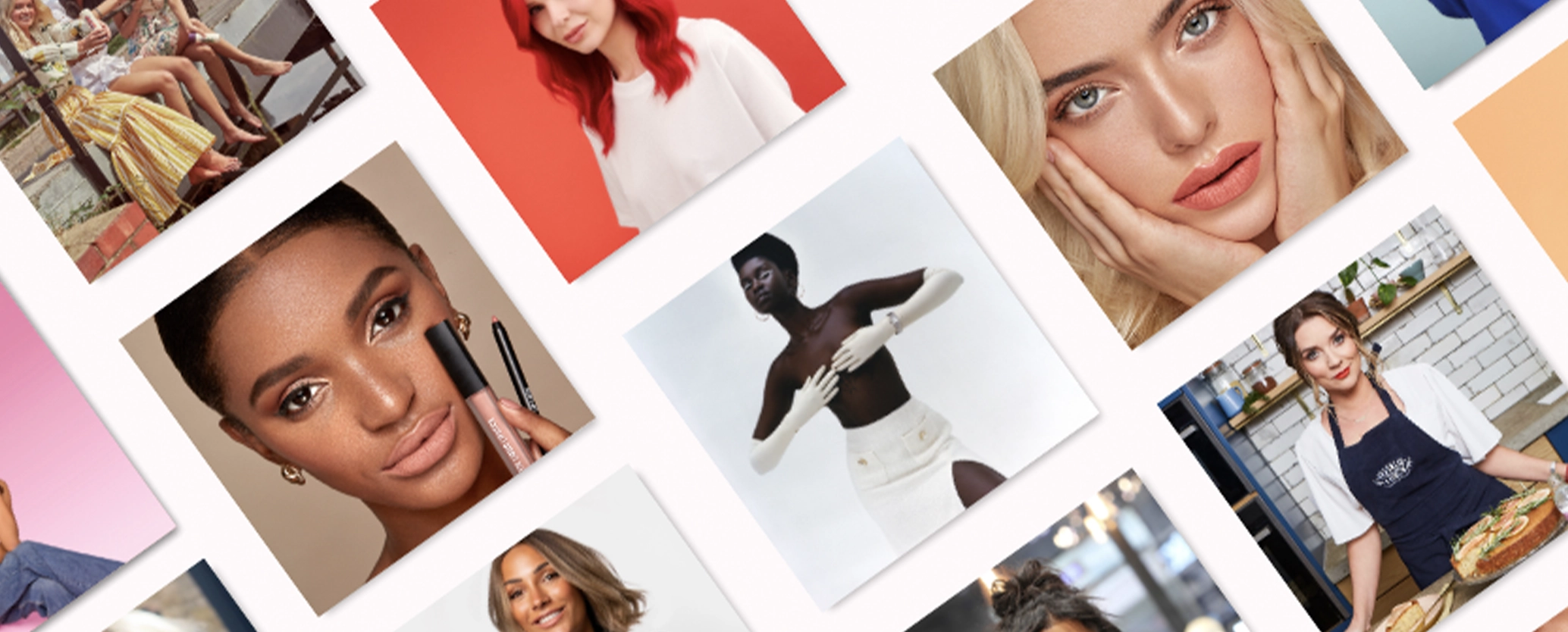
• Texture and sensory content. Close-up shots of product textures, swatches, and application – the kind of content that triggers an almost physical response. This content drives saves on Instagram and watch time on TikTok because it’s satisfying to watch, even on repeat. Think swirling lipstick, cream spreading on skin, powder being pressed.
• Creator-led storytelling. Real routines, honest reviews, and “get ready with me” content shot by creators who actually use the products. This isn’t aspirational fantasy – it’s relatable, trustworthy, and it converts. The best beauty brands partner with creators who feel like friends, not billboards.
• Before-and-after with proof. Results content – but shot for Reels, not for a clinical trial. Real skin, real lighting, real transformation. This format is one of the highest-performing in beauty because it answers the question every consumer has: does this actually work?
• Community and co-creation. Turning customers into content creators by encouraging user-generated content, tutorials, and reviews. The brands with the strongest social presence aren’t just publishing – they’re curating and amplifying content from their community.
• TikTok. Tutorial and transformation content dominates. Trend-jacking works, but with taste – the best beauty brands participate in trends that feel authentic to their products rather than forcing a connection. Educational content (“ingredients explained,” “how to layer skincare”) also performs consistently well.
• Instagram. Your feed is your brand world – curated, cohesive, and aspirational. Stories create proximity and real-time connection. Reels drive reach and discovery. Each format serves a different purpose, and the best beauty brands treat them as distinct content streams rather than repurposing the same asset across all three.
• Pinterest. The most underused platform in beauty marketing. Pinterest is a search engine, and beauty is one of its top categories. Content published today can drive traffic for months – or years. Invest in evergreen beauty content (routines, tutorials, product roundups) optimised for Pinterest search.
• Paid social. UGC-style ads consistently outperform polished campaign creative in beauty paid social. Creator-shot content with authentic testimonials converts better than studio-lit product shots. The most effective paid strategies combine UGC-style prospecting creative with branded retargeting assets.
• Define 3-4 content pillars rooted in behaviour. Not “product showcase” and “lifestyle” – those are categories, not strategies. Think “morning routine moments,” “texture that satisfies,” “real results, real skin,” and “behind the formula.” Pillars should describe what the audience experiences, not what the brand publishes.
• Batch production across formats. The most efficient beauty brands shoot for all platforms in a single production session. One day in studio can yield TikToks, Reels, feed posts, Stories content, Pinterest pins, and paid social assets. It requires planning, but the output is transformative.
• Mix content types in intentional ratios. A healthy beauty content mix might be 40% creator/UGC-style, 30% branded product content, 20% educational, and 10% community/repost. The exact ratio depends on your brand maturity and objectives, but the principle is the same: variety by design.
• Measure by platform-native metrics. Impressions alone mean very little. Track saves (interest), shares (advocacy), watch time (engagement depth), and click-through (intent). Each platform has its own signals of success, and your content strategy should optimise for the metrics that actually matter.
• If your beauty brand’s social content isn’t performing the way it should, the problem probably isn’t volume or frequency – it’s approach. The shift from campaign-first to social-first content production changes everything: how you brief, how you shoot, how you edit, and how you measure.
• At Fresheather, we produce social-first content for beauty and lifestyle brands – from high-end product photography and stop motion to UGC-style Reels, TikTok content, and paid social creative. We also deliver brand activations that bring your beauty brand to life beyond the screen – experiential, immersive, and designed to generate social content. We design content systems that work across every platform, not just the ones that look good in a deck.
• If you’re thinking about making the shift, we’d love to show you what we can do.
Read next: UGC vs Branded Content | Stop Motion for Social Media | How to Brief a Creative Agency