


Fresheather Editorial
Top 5 360 Marketing Campaigns Worth Studying in 2026

Top 5 360 Marketing Campaigns London Marketers Should Study in 2026

Five 360 marketing campaigns from London and the wider UK that hit every channel in 2025 and 2026, with the playbook behind each pick and what your team can borrow.

By Fresheather · April 2026 · 5 min read

A 360 marketing campaign in 2026 is one strategic idea delivered natively across paid social, OOH, retail, PR, CRM and earned media, all pointing at the same outcome. London is still the UK's testbed for this kind of multi-channel work, partly because Tube and bus media is on every commute and partly because the city's brand teams sit closest to retail, agency and influencer talent. The five campaigns below are not a strict ranking. They are picks for what each one did unusually well, drawn from London-led launches and UK-wide rollouts that ran prominently in the last 18 months. Read them as a buyer's guide for your own 360 build in 2026.
What Counts as a 360 Marketing Campaign in 2026
Most checklists from 2018 still treat 360 as TV plus print plus a hashtag. That bar is too low for 2026. A 360 campaign now has to live natively on at least four of the following: paid social (Meta, TikTok, YouTube), out of home, in-store or retail, PR and earned, and CRM or owned channels. The asset set for each surface should look like it was made for that surface, not retrofitted from a TV cutdown. If a campaign reads like the same 30-second film cropped six different ways, it is integrated, not 360.
If a campaign reads like the same 30-second film cropped six different ways, it is integrated, not 360.
Top 5 360 Marketing Campaigns Worth Studying in 2026
  • 1. Aldi: Kevin the Carrot 2025 Christmas. Channels touched: TV, OOH (Tube cards, supersides, 6-sheets), retail (in-store toy drops sold out within days), paid social (TikTok, Meta), PR. Why study it: Aldi treats Kevin the Carrot like a cinematic universe rather than a one-off ad, so each year's launch lands as event content. The retail toy itself is the most productive piece of CRM the brand owns, because every parent who queues for one becomes an advocate the following November.
  • 2. Lucky Saint: pub takeover and city OOH push. Channels touched: large-format OOH, pump clips and point-of-sale at pubs, paid social, founder-led LinkedIn, supermarket retail rollout, trade PR in The Drum and Marketing Week. Why study it: Lucky Saint led with conviction on a single message about quality alcohol-free pints rather than splitting the brief across audience segments. The pub side of the campaign is real product placement, not a stunt, which is what makes the OOH work hard.
  • 3. Surreal: the rebrand-as-campaign supermarket push. Channels touched: OOH (large-format billboards across London and other UK cities), paid and organic social, supermarket retail (Sainsbury's, Waitrose, Ocado, Co-op, Holland & Barrett, Whole Foods), founder-led LinkedIn, design and trade PR. Why study it: Surreal turned its own November 2025 rebrand into the campaign, running ultra-honest billboards that confessed how long the redesign took and how little visibly changed. The work exists to be photographed and reshared, so every billboard doubles as a social asset. One irreverent idea carries the brand from a poster site to a Sainsbury's shelf without losing its voice.
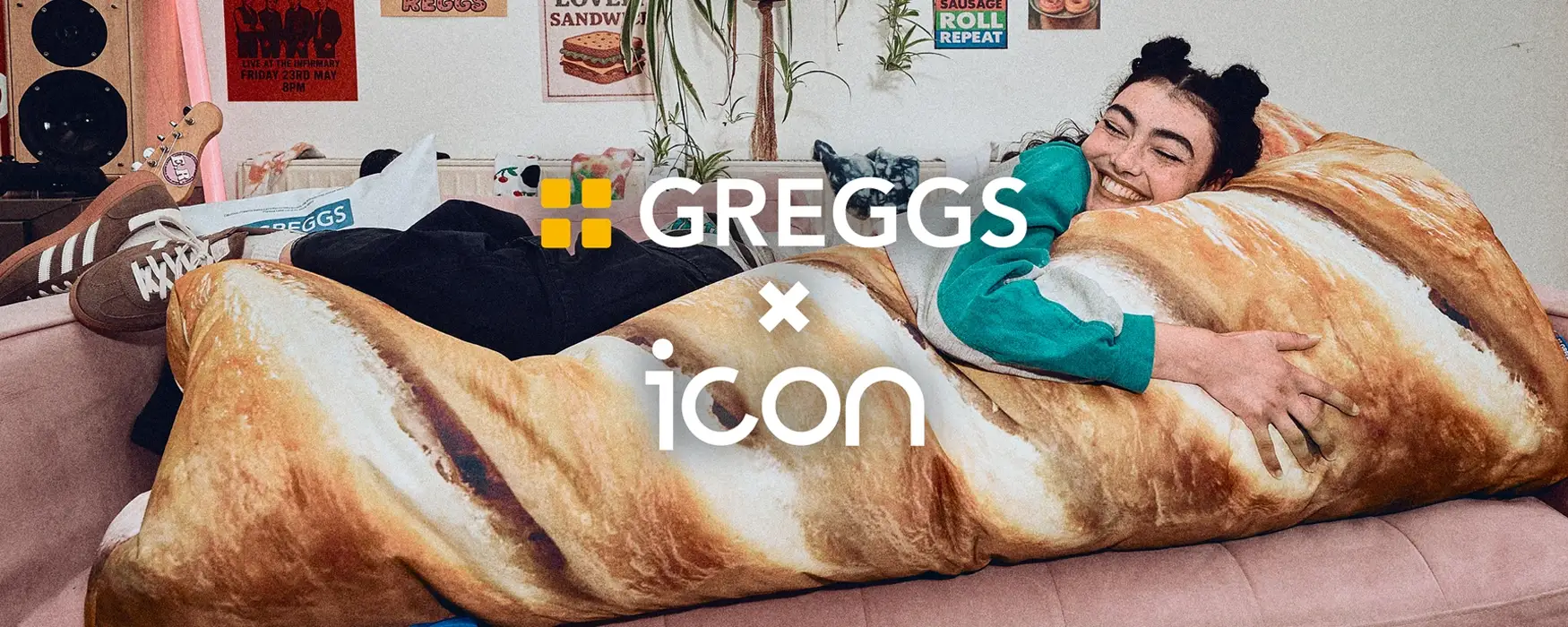
  • 4. Greggs: limited drops and Originals merch. Channels touched: retail (limited drops at flagship stores), TikTok, OOH (transit and 6-sheets), tabloid and trade earned media, CRM through the Greggs app. Why study it: Greggs runs 360 as a series of short bursts rather than one annual platform. Each drop is a self-contained idea with its own creative, retail moment and social mechanic. That cadence keeps the feed fresh and gives PR a hook every six to eight weeks.
  • 5. Burberry: Knight Bear holiday and ongoing Olympia universe. Channels touched: cinematic film, OOH (Bond Street and Piccadilly Lights takeovers), retail (Christmas window installations), social, PR, founder-style content from the Chief Creative Officer. Why study it: Burberry treats the storefront, the OOH and the social cutdowns as one unified product launch. Every surface tells a piece of the same story rather than recycling the same hero film. Luxury takes 360 seriously because it has to, but the lesson is reusable for any premium UK brand.
What These 5 Campaigns Have in Common
  • One idea, many native outputs. Each campaign starts from a single strategic thought, then delivers it natively for every surface rather than cropping a TV ad six ways.
  • Retail counts as a channel. The strongest performers use the in-store moment, the carrot toy, the pub pump clip, the rebranded cereal pack, as a media surface, not a fulfilment afterthought.
  • Earned media is briefed in. PR is treated as a deliverable from day one, not a hopeful afterthought. Each campaign gives The Drum, Creative Boom or Little Black Book an angle worth covering.
  • The asset set is large. A 2026 360 campaign produces a hero film, social cutdowns, OOH variants, retail collateral, founder-led posts and CRM creative. That volume is now the baseline, not a stretch goal.
  • The IP outlives the launch. Kevin the Carrot, Surreal's honest billboards, Burberry's Olympia look, Greggs' steak bake jokes. The campaigns that compound in 2026 are the ones the brand keeps running with afterwards.
How London Marketers Can Plan a 360 Campaign in 2026
  1. Lock the one strategic idea before any creative starts. Write it as a single sentence a colleague can repeat back to you. If the idea cannot survive that test, it will not survive five channels.
  2. Map the four to six channels you will own natively. Be honest about which surfaces you can produce great work for. A weak retail moment will always undermine a strong OOH.
  3. Brief PR alongside paid. Earned media is a channel, not a side effect. Decide in week one which trade and consumer titles you want to land in, and what story you are giving them.
  4. Plan the asset matrix early. Every channel needs its own native asset. Build a matrix that lists each channel down one axis and each phase down the other, then fill it in before production briefs go out.
  5. Decide what you keep after the launch. The 360 campaigns that compound are the ones with reusable IP. Bake in a character, a phrase, a visual world, or a ritual the brand can run again next year.
Frequently Asked Questions About 360 Marketing Campaigns

What is a 360 marketing campaign?

A 360 marketing campaign is one strategic idea delivered natively across at least four of paid social, OOH, retail, PR, CRM and earned media. The asset set for each channel is purpose-built rather than recycled from a TV cutdown.

How is a 360 campaign different from an integrated campaign?

An integrated campaign sends the same creative across every channel. A 360 campaign sends one strategic idea across every channel and produces native creative for each one. Integrated is the floor, 360 is the ceiling.

How long should a 360 campaign run?

A typical 2026 360 campaign runs eight to twelve weeks for the launch window, then converts the strongest assets into always-on channels for the rest of the year. Greggs and Aldi are good examples of brands that compound their 360 IP year after year.

Do I need a London creative agency for a 360 campaign?

Not necessarily, but the production talent for OOH, retail and social-first creative is concentrated in London, and the city's media owners control most of the highest-impact transit and digital OOH inventory in the UK. Working with a London partner shortens the production cycle on every channel.

What separates the strongest 360 campaigns from the rest?

Asset density and channel discipline. The campaigns that compound build native creative for every surface and then keep the strongest two or three assets running into always-on for the rest of the year. The ones that fade out recycle one hero film across every channel and end at launch.

How does Fresheather support 360 campaigns?

Fresheather is a London creative agency specialising in social-first, retail and brand activation production. We plug into 360 campaigns as the production partner that builds the native asset set across paid social, OOH and retail. We do not run paid media, write SEO copy or design websites in-house, so we work alongside whichever media or SEO partner already sits in the marketing stack.