By Fresheather · April 2026 · 5 min read
A 360 marketing campaign in 2026 is a single strategic idea delivered as a set of channel-native executions, not a hero film cut six ways. Paid social, OOH, retail, experiential, PR, CRM and organic each get bespoke creative built around one campaign thought, with tone, hook and format tuned to the channel.
The shift is real. Before 2020, the way to run a campaign was a TV ad cut down for YouTube, Instagram and OOH, with the retail toolkit arriving last. That model underperforms in 2026. TikTok and Reels audiences punish repurposed TV creative, retail partners now demand bespoke in-store assets, PR requires long-form story handles, and Meta and TikTok ad platforms reward creative diversity, not creative repetition.
360 Marketing Campaigns in 2026: One Idea, Many Native Outputs
The working 2026 model is a single campaign thought, a master visual or story idea, and a creative system that produces channel-native outputs from there. Every TikTok cut, every OOH frame, every retail wall, every CRM email traces back to the platform, but none of it reads as a downscale of a hero film.
The seven channels carry different jobs. TikTok and Reels do salience and culture work. OOH and DOOH do reach and credibility. Retail does conversion at the shelf. PR does authority. CRM does retention and second purchase. The strongest UK 360 campaigns this year, across beauty, FMCG and food and drink, brief each channel against a defined job from week one rather than treating everything as a place to run the hero film.
The 360 campaigns that work in 2026 develop every channel in parallel under one creative director. The ones that fail sign off the hero film first and reverse-engineer everything else.
The Channels a 2026 360 Campaign Typically Covers
- Paid social (TikTok, Reels, YouTube Shorts, Meta Feed): multiple native variants per platform, not a single hero cutdown. Plan for 20 to 40 pieces of asset variety for a four-week push.
- Organic social: community-native content, founder or team voice, and rapid reactive posts tied to the campaign window.
- Experiential or brand activation: a physical moment that is intentionally content-first, engineered to be filmed, shared and extended beyond the day itself.
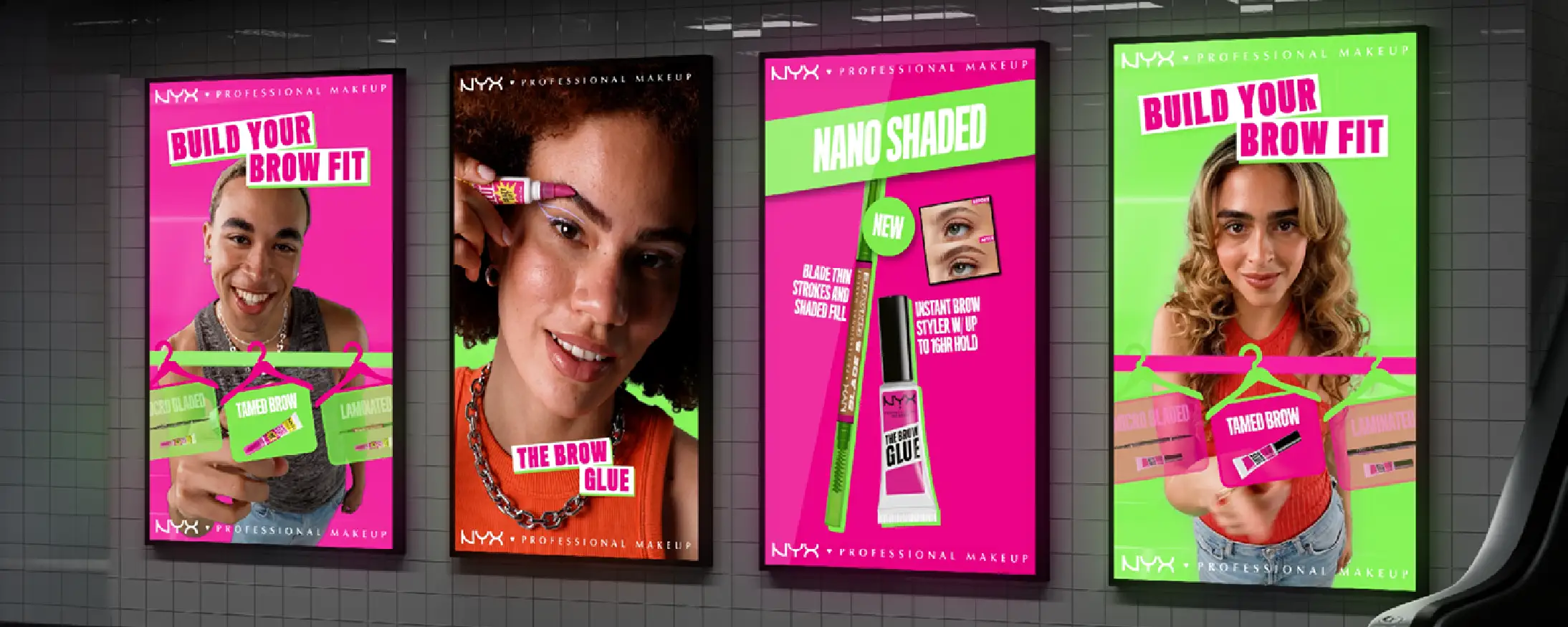
- OOH and DOOH: dynamic, location-relevant creative. Contextual digital OOH in the UK now drives significantly stronger recall than static billboards.
- Retail and trade: POS, PDP imagery, in-store screens and bespoke buy-in assets for partners like Boots, Sainsbury's or Selfridges.
- PR and earned media: an on-brief story angle that gives journalists a reason to cover, usually anchored on data, a cultural moment or the activation itself.
- CRM and owned channels: email flows and loyalty touchpoints that pull the campaign into existing customer relationships, not just new acquisition.
When a 360 Campaign Is the Right Call (and When It Is Not)
- Right call: major product launch or rebrand. Coordinated presence earns the right to take up space in the market and forces all channels to tell the same story at once.
- Right call: a single time-bound cultural moment. Seasonal pushes, awards, sports tentpoles and category calendar events all benefit from the amplification of a full 360 approach.
- Right call: a brand in category transition. If you are repositioning, a coordinated 360 campaign resets perception faster than a drip of individual channel pushes.
- Not the right call: always-on performance marketing. Weekly growth work is better served by a continuous creative system, not a set-piece campaign.
- Not the right call: small budget with fragmented objectives. A half-resourced 360 campaign is usually worse than two well-executed channel plays.
- Not the right call: very narrow or niche audiences. If your buyer lives in two specific places, invest there rather than spread thin.

How to Plan a 360 Campaign Before Production
- Lock the campaign idea in one line. If you cannot describe the central idea in a sentence, the 360 rollout will splinter into channel silos.
- Write channel-native briefs, not cutdown briefs. Each channel gets its own output spec, hook style and format. TikTok is not OOH with sound.
- Build the asset matrix in the scoping phase. Map every asset, format and ratio before production starts. Surprises in week three of a shoot are what blow budgets.
- Plan creator and UGC input up front. If creators are part of the 360 mix, brief them in the same planning sprint as the hero shoot, not after.
- Decide measurement categories before the campaign goes live. Awareness, engagement, consideration, conversion and retention should each have a named metric and an owner.
- Build in reactive capacity. Reserve 10 to 15% of the content budget for content made during the campaign, in response to what the audience actually reacts to.
Measuring a 2026 360 Campaign Honestly
- Media-mix modelling over last-click attribution. 360 campaigns are designed to move brand and performance metrics together, and last-click attribution undersells their effect.
- Brand lift studies for awareness channels. Platform-native brand lift tools on Meta and TikTok are no longer optional for measuring the paid social legs of a 360.
- Earned reach and share of voice. Track earned coverage, creator mentions and social listening volume alongside paid impressions.
- Retail sell-through tied to campaign windows. Benchmark the four weeks before, during and after the campaign, not just the campaign window itself.
- Creative velocity and diversity scoring. Platforms reward testing. Track how many distinct variants ran and what the best performer looked like.
- Fresheather builds 360 campaigns end to end for UK brands, from strategic platform through to production, retail, experiential and paid social output. Explore our 360 Campaigns and Brand Activations services, or speak with us about your next launch.