

Fresheather Editorial
How Each Component Is Implemented at a Glance

What a 360 Marketing Campaign Includes and How to Implement One in 2026

A 360 marketing campaign in 2026 includes seven components: a single creative idea, hero content production, social-native cutdowns, paid media, out of home, retail and event activation, and an always-on data layer. Implementing one means aligning brief, production, channel and reporting around that single idea. This guide walks through every component, the four-phase workflow, the typical budget split, and the FAQs Fresheather hears most often from London marketing teams.

By Fresheather · April 2026 · 5 min read

Quick answer: a 360 marketing campaign in 2026 includes seven components that all express one creative idea. The single idea is the spine. The seven components are creative strategy, hero content production, social cutdowns, paid media, out of home, retail and event activation, and a data and reporting layer. Implementation runs across four phases: brief and idea lock, production sprint, channel launch, and always-on optimisation. This guide is the implementation companion to Fresheather's pillar on what a 360 marketing campaign is, and the worked-examples listicle of the top five 360 campaigns London marketers should study this year. It breaks down what each component is, how London brands actually implement them in 2026, what the typical budget split looks like, and where most campaigns go wrong. What you will find below: 1. The seven components a 360 marketing campaign includes 2. The 2026 implementation workflow, step by step 3. Production roles and channel responsibilities 4. Common mistakes London brands make in 2026 5. FAQs on cost, timing and how Fresheather supports 360 campaigns
The 7 Components a 360 Marketing Campaign Includes in 2026
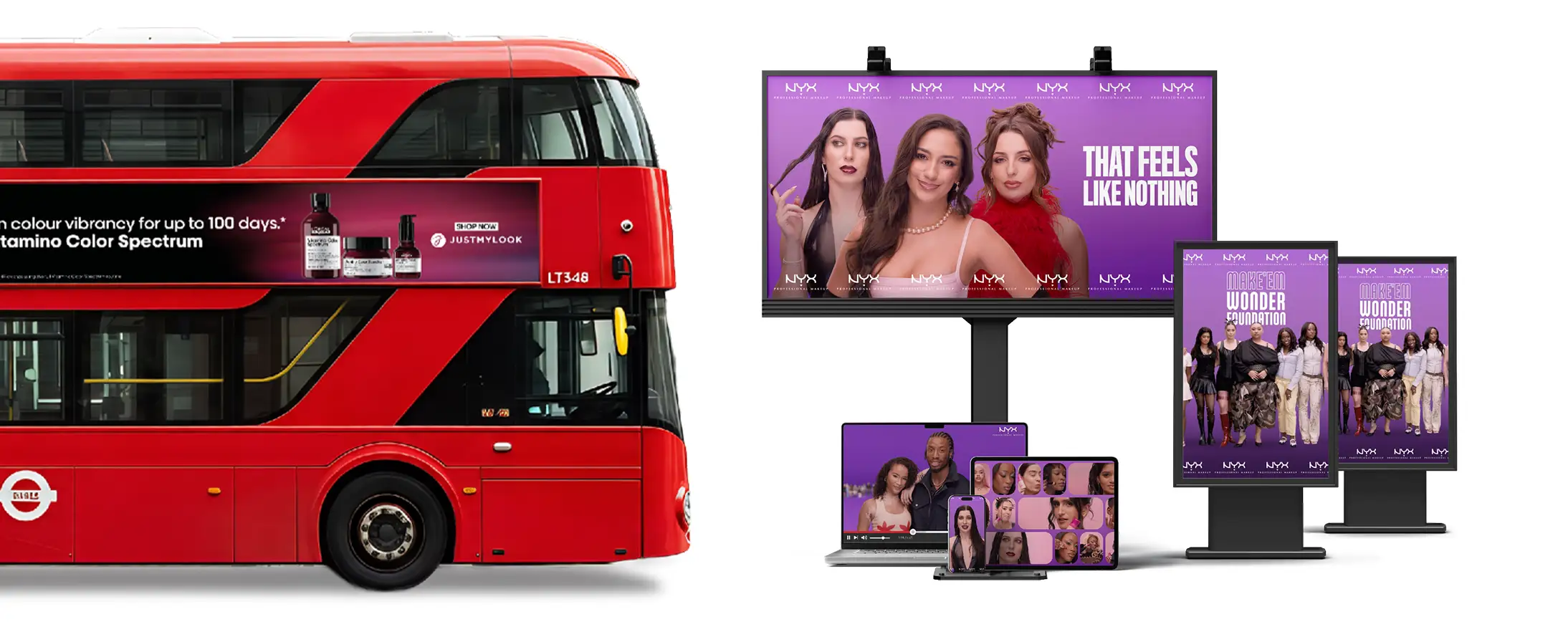
Treat each of the seven components as a non-negotiable line item on the brief. Skipping one is the single most common reason a 360 campaign reads as integrated rather than 360. 1. Creative strategy and the single idea. The strategic spine that every other component expresses. Without it, the campaign reads as a media plan with creative attached. 2. Hero content production. The high-craft anchor asset, often a film, stop motion, CGI sequence, or photography series, that sets the visual world. Fresheather builds this layer for clients across stop motion, CGI and 3D, photography, and design. 3. Social-native cutdowns. Vertical TikTok and Reels, square Meta variants, YouTube Shorts and longer cut, plus founder-led LinkedIn content. Each surface is a different edit, not the same edit cropped. 4. Paid media. The buy across paid social, programmatic OOH, paid search and addressable channels, planned in parallel with the creative rather than after. 5. Out of home. Tube cards, supersides, 6-sheets, Westfield, Piccadilly Lights, and digital OOH. London still controls most of the highest-impact UK inventory. 6. Retail and event activation. In-store moments, pop-ups, festival activations and limited drops. Treated as a media surface, not a fulfilment afterthought. Fresheather runs this layer through brand activations and retail and events. 7. Data and reporting layer. Always-on tagging, brand and search lift studies, social listening, and a creative effectiveness scorecard. Set up before the campaign launches so the first data point is the baseline.
If a 360 campaign reads like the same hero film cropped six ways, it is integrated, not 360. Implementation discipline is what separates the two.
How Each Component Is Implemented at a Glance

The seven components break out roughly like this in a 2026 London 360 campaign. Use it as a planning sense-check, not a fixed rule.

  • Creative strategy and the single idea. Typical budget: 5 to 10%. Lead time: 2 to 3 weeks. Owner: strategy lead or planner.
  • Hero content production. Typical budget: 20 to 30%. Lead time: 4 to 8 weeks. Owner: stop motion, CGI and 3D or photography production partner.
  • Social-native cutdowns. Typical budget: 10 to 15%. Lead time: 2 to 4 weeks alongside hero. Owner: social content production team.
  • Paid media. Typical budget: 30 to 45%. Lead time: 2 weeks to plan, always-on to run. Owner: media agency or in-house performance team.
  • Out of home. Typical budget: 10 to 20%. Lead time: 4 to 6 weeks for booking, longer for premium sites. Owner: media agency plus production for adapts.
  • Retail and event activation. Typical budget: 5 to 15%. Lead time: 4 to 12 weeks. Owner: brand activations or retail and events partner.
  • Data and reporting layer. Typical budget: 2 to 5%. Lead time: set up pre-launch, then monitor weekly. Owner: in-house analytics or specialist partner.

The split shifts with category. Luxury skews more to OOH and retail, alcohol skews more to OOH and earned, and challenger CPG skews harder toward paid social and TikTok. Use the percentages as a sanity check, not a budget cap.

How to Implement a 360 Marketing Campaign in 2026, Step by Step
  1. Phase 1: Brief and idea lock (weeks 1 to 3). Write the brief as a single sentence the team can repeat back. Pressure-test it against three audience tensions and one cultural moment. The idea is locked when a junior planner, a producer and a media buyer can all describe it the same way without prompts.
  2. Phase 2: Production sprint (weeks 3 to 10). Hero film or stop motion and the social cutdowns are produced in parallel, not sequentially. OOH and retail adapts are briefed off the same shot list. Fresheather treats this as one production block rather than three handovers, which compresses two to four weeks out of a typical 360 timeline.
  3. Phase 3: Channel launch (weeks 10 to 14). All paid, OOH, retail and PR go live within a 14-day window so the campaign reads as one cultural moment, not a slow drip. Earned media should already have the assets and quotes booked in by week 9.
  4. Phase 4: Always-on optimisation (week 14 onwards). Decide before launch which assets convert from launch creative to always-on creative. Most 2026 campaigns keep the strongest two or three social cutdowns and one OOH style running for nine to twelve months as the always-on layer.
Common Mistakes London Brands Make in 2026
  • Briefing 360 as a media plan. The campaign is the idea first, the channels second. If channel quotas drive the brief, the asset set ends up retrofitted instead of native.
  • Treating retail as fulfilment. The retail moment, the pop-up, the in-store drop, is a media surface in 2026. Brands that under-invest here lose the highest-converting touchpoint of the campaign.
  • Producing one hero asset and cropping it. The 2026 baseline is multiple native assets. A vertical TikTok edit and a 16:9 YouTube edit should look like they were briefed separately, not exported from the same timeline.
  • Briefing PR last. Earned coverage in The Drum, Creative Boom, Little Black Book, Marketing Week and Campaign needs the angle, the assets and the quotes locked in week 1, not week 12.
  • Skipping the data layer. If you only set up tagging at launch, the first three weeks of brand lift data are missing the baseline. Stand the data layer up before the first asset goes live.
  • Forgetting the always-on conversion. Most 360 campaigns end at launch and waste the asset library. Decide in week 1 which assets convert to always-on and produce them with that life span in mind.
FAQs: What a 360 Marketing Campaign Includes and How to Implement One

What does a 360 marketing campaign include in 2026?

A 360 marketing campaign in 2026 includes seven components: creative strategy and a single idea, hero content production, social-native cutdowns, paid media, out of home, retail and event activation, and a data and reporting layer. Each component delivers the same single idea natively for its surface.

How is a 360 marketing campaign implemented?

Implementation runs across four phases. Phase 1 is brief and idea lock (weeks 1 to 3). Phase 2 is the production sprint where hero, social and OOH adapts are made in parallel (weeks 3 to 10). Phase 3 is channel launch in a tight 14-day window (weeks 10 to 14). Phase 4 is always-on optimisation, where the strongest two or three assets convert into always-on creative for the rest of the year.

How long does a 360 marketing campaign take to launch?

A typical 2026 360 campaign takes 12 to 14 weeks from brief lock to launch, with eight to twelve weeks of always-on activity afterwards. Production agencies that run hero, social and OOH adapts as one block can compress this to ten weeks.

What is the typical budget split for a 360 marketing campaign?

A common 2026 split is 5 to 10% on strategy, 20 to 30% on hero production, 10 to 15% on social cutdowns, 30 to 45% on paid media, 10 to 20% on OOH, 5 to 15% on retail and activation, and 2 to 5% on the data and reporting layer. Luxury skews more toward OOH and retail, challenger CPG skews more toward paid social.

How is a 360 marketing campaign different from an integrated campaign?

An integrated campaign sends the same creative across every channel. A 360 marketing campaign delivers one strategic idea natively across every channel, with purpose-built creative for each surface. Integrated is the floor, 360 is the ceiling.

How does Fresheather support 360 marketing campaigns?

Fresheather is a London creative agency that plugs into 360 marketing campaigns as the production partner across brand activations, social content, stop motion, CGI and 3D, design, photography, 360 and retail and events. We do not run paid media, write SEO copy or design websites in-house, so we work alongside whichever media or SEO partner already sits in the marketing stack.

Read next: What is a 360 marketing campaign and Top 5 360 marketing campaigns London marketers should study in 2026.
